Mineral Feeders and Lick Tanks – help keep you livestock healthy

Here is a great article from Working Ranch about the importance of getting your livestock the minerals they need during the winter months and the attention to the type of supplement quality and quantity.

Barn World also carries a large selection of mineral feeders and mineral licks to help ensure the proper nutrients are a part of the diet.   A mineral feeder is an important part of facilitating the absorption of minerals.

From ground mineral feeders like the Dura Life to the wind vane style mineral feeders like the upright mineral feeder, Barn World has the tools to make sure your animals remain healthy all season long.

Make sure your cows are nutritionally ready

From Working Ranch

– by Gilda V. Bryant

– photo by Lucie Wiese


Minerals are important for herd health, reproduction and efficiency during winter. However, that is only part of the picture.  Extra protein and energy are vital during cold, wet weather.  Producers should also be aware of forage and by-product supplementation quality, as well as body condition scores.

“The challenge with minerals is there’s just no single answer,” says Rick Rasby, PhD, PAS (Professional Animal Scientist), Beef Extension Specialist, University of Nebraska (Lincoln).  “Think about minerals as part of a total diet those animals are eating.”

Rasby encourages producers to sample baled forages for moisture content, protein, energy and mineral profiles.  Once a producer knows his forage quality, he can adjust the mineral package for his herd.  He says, “Use the mineral as a supplement to bridge the deficiency gap in those forages that are being consumed.”

He also recommends that producers analyze samples of supplemental feed such as gin trash, cotton seed, or distiller’s grains.

Many regions with ethanol plants have distiller’s grains available for the cow/calf sector.  Rasby says, “It’s an excellent feed, works well with forages, and is high in protein, energy and phosphorus as well.”

Typically low in winter forages, phosphorus is a mineral that’s vital for bone and teeth development, and metabolic, neurological and cellular functions in cattle.  It’s also one of the most expensive minerals to supplement.  According to Rasby, reducing or omitting phosphorus from the mineral package when feeding distillers grains can save money.  Get advice from a nutritionist or beef extension specialist about adjusting nutrient values when feeding these supplemental rations.

In addition to minerals, protein and energy, utilizing body condition scores (BCS) is a management practice that cow/calf operators can implement on a regular basis. Scores range between one and nine with one being a very poor specimen and nine being obese.

Rasby adds, “Having mature cows in condition score five at calving not only has an impact on what happens at calving, but also on how quickly those cows are ready to rebreed after calving.  Those first-calf heifers probably need to be in a little bit better condition, say conditioning score six.

“Cows that breed early in the breeding season are in the right nutritional status.  Their calves are older at weaning and generate more dollars,” explains Rasby.

Is it right?

How can a cattleman determine if his mineral supplement and diet are on target? “Measure how they perform at calving,” replies Rasby.  “Are they good mothers?  Do they give enough milk? Does the calf perform well while it’s on its mother?  How quickly does the cow get ready to rebreed?”

Providing minerals is crucial to the Thomas Angus Ranch outside of Baker City, Oregon. Located in a valley between two mountain ranges, and flanked by sagebrush hills, owner Rob Thomas says, “We have long, fairly hard winters.”

He provides a custom mineral mix to his spring and fall calving herds, depending on forage analysis to fine-tune the supplement package.  Thomas says, “We increased levels of zinccopper, and selenium, the three minerals we’re deficient in.”

Beginning in November when snow is on the ground, he’ll feed alfalfa and grass hay.  He says, “We put up a lot of our own hay, so we feed what we put up.  We test our feed to see what minerals we need.”

As a result of their efforts he reports, “We have healthier cattle, better immune response, fewer treatments and a lower death loss.  We see increases in reproduction and gain and better feed utilization, which is important right now.  With extremely high feed prices, we want to utilize every bit of that feed, if possible.”

Across the country, Kevin Yon raises Angus cattle in the mild winters of west central South Carolina.  He provides three mineral mixes: summer, winter, and one for young growing livestock.  Yon says, “Our winter mineral program doesn’t differ drastically from our summer mineral program.  We include a higher level of magnesium to prevent grass tetany.  If all goes well we hope to have lush grazing on a limited basis, even in December and for sure in February and March.”

His winter diet includes stockpiled forages such as Fescue or Bermuda grass.  When possible, Yon likes to have rye grass or small-grain winter annuals on hand.  He explains, “It could be a combination of those and sometimes we’ll use a protein or energy supplement, which could be commodity by-products, such as whole cotton seed, dried distillers grains or corn gluten.”

He analyzes feed, grains and commodity by-products, seeking advice from a nutritionist to adjust his mineral program as needed.

“It’s important to have a year-round high-quality mineral program,” Yon advises. “That’s not always the cheapest bag of mineral, but it has the high levels that are needed for cattle in your area.  The cheapest bag is not always the best.”

Yon finds that his cattle have a more consistent consumption if he allows free choice at all times.  He says, “Know what the consumption rate should be and monitor that. In our part of the world, a covered mineral trough is important so the mineral doesn’t get wet, cake up and the cattle don’t eat it.

“As a producer, I see the benefit of minerals.” Yon explains, “The biggest for us is reproduction, cow herd efficiency, immune response, cattle health, and growth and development.  At our place we try to feed a cow as cheap as we can because 60-70 percent of our annual cost involves nutrition.  We don’t see that minerals are the place to skimp.”

Thomas also recommends feeding minerals, saying, “Do it based on science.  Go ahead and get a forage analysis based on what you’re feeding and do that every time you get a new batch of feed, so you know what you’re feeding and what minerals you need to add to the ration.”

Rasby says, “To be competitive, you’re really going to have to watch feed costs. How you put together feeding programs to meet your herd’s nutritional needs is going to be critical.”

To find a list of certified feed testing laboratories, check out: www.foragetesting.org.


PROTEIN AND ENERGY

“Minerals don’t do much if you’re not doing a good job of covering your water, energy, and protein needs for those cows,” advises Ken Bryan, PAS, and Ruminant Specialist with Cargill.  “A balanced diet is important because you have the added stress of environmental conditions like cold, wet weather, mud and wind, which are going to increase the cow’s nutritional requirements.”

Adequate amounts of energy and protein are critical during winter conditions. “If a cow will eat twenty-four pounds of dry matter in forage, she’s going to get all the energy she needs,” Bryan explains.  “If that rumen is functioning well, she’ll break down the fiber and utilize that feed.  That’s your energy source.”

Protein, a much-needed nutrient in cattle diets, is composed of true protein andnonprotein nitrogen.  Protein in forages will gradually decline, providing less protein as winter progresses, with a higher percentage of fiber.  “The nasty thing about fiber is a high fiber, low quality forage diet will restrict intake,” Bryan says.  “Now we’re going to supplement with a protein source.  The nice thing is, there are options for protein supplementation.”

“There’s the old standby, cake or range cubes, protein tubs or blocks and leftovers from oil seed products such as sunflower, cotton seed, or soybean meal and distillers grains from corn.  Look at the most economical way to deliver protein to the cow.”

Bryan cautions, “We’ve got to keep a minimum amount of fiber in that diet as we feed energy supplements.  We’re going to cause some long- term changes in that cow’s rumen… we’ll ruin her if we feed her like a feedlot steer.”

Facebooktwitteryoutube

Hoof Care and Maintenance Kit from Barn World

BarnWorld.com

Hoof Care and Hoof Maintenance

The Hoof-it Maintenance Kit is a great hoof care kit that makes caring for your animals a breeze.  Hoof Repair and maintenance is provided by farriers and horse lovers alike and this kit is an easy way to care for your equine and livestock yourself.

See how simple it is in the following video:


From the video:

Hoof Care and Maintenance Kit:

The Hoof Care and Maintenance Kit is a three step system.

  1. Apply sanitizer to the hoof to eliminate any bacteria or thrush
  2. Apply conditioner:  apply conditioner to strengthen and condition the hoof
  3. Apply the hoof strengthener, it will act as a clear coat to protect the hoof.  It will also leave the hoof with a nice shiny the gloss.

This very simple and effective system is a surefire way to keep your hoofs healthy and looking good.

Visit Barn World today for all your farrier supplies and needs and remember, we carry a large supply of livestock, farm and ranch supplies.  Barn World offers everything from saddle pads to cattle guards.

Call 720.238.2190 or visit www.BarnWorld.com today!


Facebooktwitteryoutube

Cattle Guard Ratings

BarnWorld.com

Barn World carries cattle guards rated for public highways and road construction project in addition to private use designs for use on private property.

Rated Cattle Guards
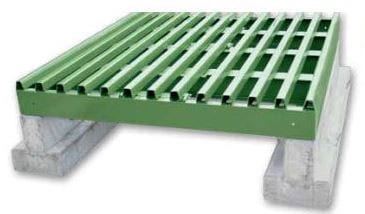
Rated Cattle Guards are available in four different certified load ratings. These cattle guards are intended for use on public highways or for heavy off-road equipment.
The American Association of State Highway Transportation Officials (AASHTO) provides guidelines for cattle guards with maximum load ratings. AASHTO load ratings are suitable for all types of applications including heavy-duty logging roads.

AASHTO Design Specifications

Our HS20-rated cattle guards are made from schedule 40 steel and come in a variety of sizes to fit various cattle guard projects. We can alter the design of our cattle guards to use different kinds of pipe and rail depending on your needs. We have used round pipe, square, rail, I-beam and other types of rail and channel to make rated cattle guards that are suitable for all public crossings.

Barn World HS20-rated cattle guards conform to AASHTO load rating requirements type of truck and maximum axle load. Our rated cattle guards come with an engineer’s stamp and are certified to meet the AASHTO load ratings so you can feel confident that you are getting the highest quality cattle guard.


cattle-guard on concrete foundations

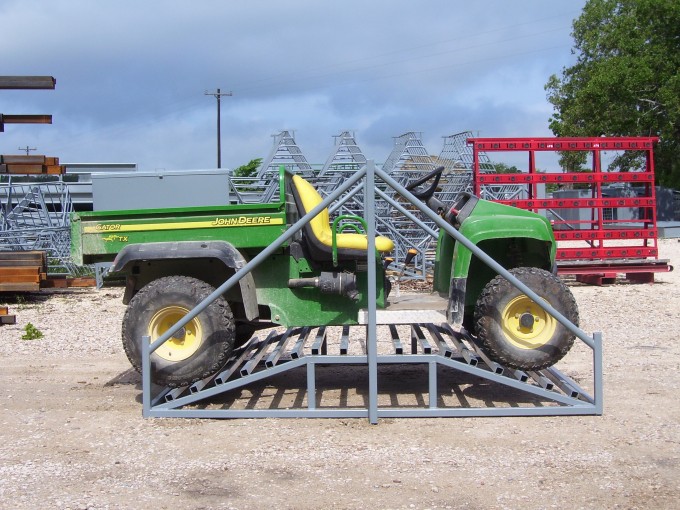
We also offer a new ATV cattle guard for crossing fence lines on an ATV. This design allows for easy, onsite installation by simply setting the unit in the fence line and attaching the fencing directly to the guard uprights.


side view of atv on a cattle guard

Call Barn World with your questions or quote request for delivery right to your door!  Call (720) 238-2190 or request a quote at Sales@BarnWorld.com today.

Facebooktwitteryoutube

The Texas drought makes hay feeders ever so important

The extreme Texas drought has made hay feeders even more important than ever.  Given the extreme conditions and the lack of natural hay and even the lack of hay from neighboring states available to be trucked in, it has become a necessity to have hay feeders that eliminate as much waste as possible

Barn World has a large selection of hay feeders that minimize waste and maximize the amount of hay that gets to your herd.  Please view our large hay feeder selection online to minimize the cost of feed and help eliminate any possibility of  selling out any livestock.

We have a great selection of combo hay feeders, standard bale feeders, portable hay feeders and stall feeders.  In fact, visit BarnWorld for all of your livestock equipment and livestock supply needs.

Below is a succinct  article from Progressive Cattleman detailing the severity of the drought Texas is dealing with.  We hope that it ends soon and the herds get back to normal quickly.

Texas crop, weather: It’s a ‘no-brain-er;’ sell out herds now!

Tuesday, 16 August 2011 14:10
Written by Tony Okon – Progressive Cattleman
COLEGE STATION – With little to no grazing and hay, should livestock producers continue to try to buy feed, move cattle to another state or just sell out?

“It would be much less expensive to just get out and come back later,” said Dr. Larry Redmon, Texas AgriLife Extension Service state forage specialist. “And that’s the message that we’re trying to convey.”

Many livestock producers have already tried to cut feeding costs by extensively culling their herds, but have held onto enough cows to rebuild their herds if the drought passes, he said.

In some dry years, that might be a good strategy, but not this one, Redmon said.

“It’s unprecedented,” he said. “(We’ve had) the 12 driest months in Texas history, and there’s just not many ways to combat that.”

With grazing and hay supplies next to non-existent in many areas of the state, it’s getting very expensive to buy feed. On average, it’s costing producers “somewhere around a $100 a month to have these animals (cows) stay in the pasture and feed them,” he said.

Another choice is to move cattle elsewhere, most likely another state during this drought, and lease land where there is grazing, Redmon said.

“It could be western Mississippi; it could be eastern Louisiana; or it could be maybe Missouri,” he said. ‘I haven’t talked to anybody this year, but in the past couple of years people have called me from other states and they’ve quoted prices of $20 to $22 per (cow/calf) pair per month. Even assuming that’s $25 or $30 that’s still a far, far cry from $100 a month.”

Of course, one has to add the cost of hauling a trailer load of cattle to the leased grazing, but even with that added cost it still cheaper than trying to buy hay and feed at today’s prices, he said.

“It’s probably going to be $3 to $3.50 a loaded mile –something like that,” he said. “If you just put all that together … the savings could still be tremendous if a person could find a place to put those animals.”

But completely selling out makes more sense yet, Redmon said, given there’s no guarantee this drought will end anytime soon.

“Some people would counter and say it’ll cost more to come back into the business later because conditions will have improved, and more people will be getting back in,” he said. “That’s true. But again, looking at the difference in what it would cost to buy cows and come back in at some later date — versus what they would spend trying to go through this drought — mathematically, it’s just a no-brainer.”

More information on the current Texas drought and wildfire alerts can be found on the AgriLife Extension Agricultural Drought Task Force website athttp://agrilife.tamu.edu/drought/.

AgriLife Extension district reporters compiled the following summaries:

Central: Northern parts of the district received from 2 to 5 inches of rain, but conditions remained largely unchanged. Sale barns were full each Saturday. Cattle were getting thin. All livestock producers were heavily feeding. Hay and water was in short supply. Farmers continued to harvest crops worth harvesting. Many crops were being zeroed-out for insurance purposes.

Coastal Bend: Though light showers were reported in some areas, extreme drought conditions persisted. The cotton harvest was ongoing. Livestock producers continued to sell off herds due to lack of forage. Most watering ponds were dry. Some water wells were also going dry, and some producers were drilling new ones. Many trees were dying or showing signs of drought stress.

East: No rain was received, and the drought worsened. Water levels in stock ponds and creeks were dangerously low. Many trees were dying or going dormant early. Hay was no longer being harvested. Producers were searching for hay to buy. Out-of-state purchases were becoming more common. Ranchers continued culling and selling off herds. Livestock began to show signs of obvious weight-loss.

North: Soil moisture was very short over most of the area. Daytime highs of 100-plus degrees and nighttime lows in the mid-80s continued to be the norm. A few areas received some rain, which might improve pastures if they are not overgrazed and given time to regrow. Without rain, most pastures continued to go downhill. The corn and grain sorghum harvests were nearly complete with yields reported to be slightly above average. Soybeans – those that survived the drought — were also being harvested. Some soybeans were cut for hay and the rest were being plowed under. Corn and milo stalks were being harvested as hay and shipped all over the state. Where there was hay, it was being sold before it was cut. Once baled, hay was being loaded on trucks and shipped out before the baler got cold. Most livestock producers were feeding hay and supplements to cattle. With heavy supplemental feeding and short hay supplies, producers continued to cull their herds and were scrambling to find hay for immediate feeding and for winter. Some livestock producers were selling out. Water was becoming a major concern as ponds were getting very low. Hay producers hoped for late August or September rains so they could possibly produce one more cutting. Trees were dying from the record heat and lack of rain for over 60 days in most areas. Rangeland and pasture conditions were very poor.

Panhandle: Most of the region received scattered showers and cooler weather. Accumulations ranged from a trace to 1.5 inches. The rain and cooler weather was welcomed, but it was not enough moisture to help the very thirsty crops. Soil moisture levels remained very short. Irrigators were watering full swing trying to keep up with water demands. Gray County received hail along with the rain, which stripped the leaves off some cotton and corn. Also, high winds toppled six pivots in that county. The rain greened up some pastures, but more was needed to really make a difference in the very poor conditions. However, the cooler weather did ease water needs and heat stress on cattle. Supplemental feeding of livestock continued. Producers who were trying to hang on to their cattle were buying hay form other states, with hauling costs running $20-$30 per ton.

Rolling Plains: Rain! But the amount varied greatly from county to county. Throckmorton County received from 0.5 inch to 3 inches of rain, while Stephens County received from 0.5 inch to 5 inches. Haskell County received as much as 2.8 inches. Other counties received from 0.1 to 0.8 inch. However, the majority of counties did not receive any measurable moisture. The rain was no help for cotton producers, though it did help wheat growers who would like to plant in September. More moderate temperatures, especially nighttime lows, helped relieve stress on livestock. Cotton was fruiting, but even under heavy watering, fields still looked weak. Producers were weaning and selling calves. Some producers are selling or shipping their cows to out-of-state grazing. Hay was scarce and expensive when available. A few hay producers hoped to have a late-summer cutting. Large trees were beginning to show the effects of too little moisture.

South: Record-high temperatures continued. In Webb County, temperatures of 104 and higher were reported. Some daytime highs reached 108 or even 110 degrees. Rangeland and pastures further declined, forage supplies and stock-tank water levels dropped. Many livestock water tanks had already completely dried out. In Live Oak County, there were record numbers of livestock sales at sale barns. The heaviest livestock culling was taking place in Webb and Zavala counties, where ranchers have completely run out of water resources. Also, feed sources in those counties were very scarce. The western portion of Frio County received 0.5 to 1 inch of rain. Also in that Frio County, the corn harvest was completed, the cotton harvest began and the sorghum harvest was ongoing. Most crops in Jim Wells County were harvested, and fields were ready for fall and winter preparations. In Zavala County, farmers were preparing land for cabbage and spinach planting, and pecan producers were irrigating orchards in the critical kernel-development stage. In Hidalgo County, the cotton harvesting was winding down. In Starr County, farmers were planting sugarcane and fall vegetables. In Willacy County, harvesting of late-planted cotton continued.

South Plains: Some areas received as much as 3 inches of rain. Others got none. The remaining cotton is from two weeks to a month ahead of schedule; and the final stages of flowering or in cut-out. In other areas, cotton was shedding bolls and squares from lack of water. Of the 42,000 cotton acres planted in Garza County, only 8,000 remained. Many producers were planning on an early harvest. High temperatures dropped into the 90s. Most counties were still under burn bans. Some growers chose to dig and harvest peanut vines for hay due to the low pegging rate. White grapes in Yoakum County were harvested, and red grapes were expected to be ready by the end of August. Cattle producers were selling off herds because of shortages of grass, hay and water.

Southeast: The extreme drought did not budge. The month of July closed with a nearly 22-inch rainfall deficit for the year in some parts of the region. Some areas had scattered showers. Grain sorghum and rice fields were being baled and sold for livestock forage. Early July had brought some light rains that allowed for re-growth of grain sorghum. But tests showed very high prussic acid levels. People feeding this forage to livestock were cautioned to test all sorghum grass species before grazing or feeding as hay. Pond levels continued to drop. The condition of cattle continued to decline with the as pastures worsened. Cattle sales were up. Some infestation of red rice was reported in the rice crop.

Southwest: Sporadic showers brought 1 inch to 2 inches of rain to some areas, but most of the region remained completely dry. High afternoon winds created dust storms. Record high or near-record high temperatures of over 100 degrees aggravated the drought. The region remains in wildfire-alert status. Many stock tanks were dry. Forage availability remained well below average for this time of the year. The cotton, watermelon and cantaloupe harvests were all ongoing. Some farmers planted sweet corn for an early fall harvest. Peanuts, pecans and landscape nursery crops continued to make good progress wherever irrigation water was still available. Ranchers were providing supplemental feed for livestock.

West Central: Extremely hot, dry conditions continued. Wildfire dangers remained very high. Some areas reported scattered showers, but not enough moisture was received to make a difference. The heat has destroyed almost everything planted, including gardens. Rangeland and pastures were in poor condition. Trees in pastures were dying at an alarming rate. Stock-water tanks were very low or completely dry. Ranchers were hauling water to most livestock. Hay supplies were very limited. Producers continued to cull livestock herds. More and more livestock producers are selling out. 

Photos courtesy of Texas AgriLife Extension Servive, Robert Burns.

Top right: Desperate for hay, the owner of this baler and tractor was trying to harvest a parched field of grass on a neighbor’s property in East Texas. A spark from the baler ignited hay inside, and the resulting fire spread to more than 100 acres. No houses burned, but the operator lost both machines plus his pickup truck, which was parked nearby, according to witnesses.

Middle left: Dr. Larry Redmon, Texas AgriLife Extension Service state forage specialist, during times of better grazing in East Texas.

Bottom right: The 12 Texas AgriLife Extension Service Districts.

Facebooktwitteryoutube

Hoof Healing

Livestock Supplies

A general guide for horse handling for new owners – a post from the Healthy Hoof blog.


At Barn World, we offer a lot of great livestock products and everything from cattle guards, hay feeders, feed bins and saddle pads.  When discussing the large array of available products with customers, we sometimes lose sight of the fact that a lot of our customers are new to caring for and interacting with livestock, horses and poultry.  As such, I thought I’d include some general posts for those who are new to caring for and owning animals.

If you’d like to share your ideas or comments please feel free and you may always contact Barn World at Sales@BarnWorld.com or call 720-238-2190.


Recently I came across a good general information blog post from the Healthy Hoof. It’s a general post, but provides a great initial outline and tips for interacting with your horse.

Horse handling for new horse owners

Even in today’s economy (or maybe because of it), new horse owners pop up every day. An inexperienced client will often purchase an inexperienced horse. It can be a challenge to teach both owner and horse techniques that ensure the safety and cooperation for everyone involved, but also very rewarding to be able to start with a “fresh” owner and essentially create the perfect client/professional relationship.

Did you know that farriers interact with more horses than veterinarians, and even horse trainers? Due to the cyclical nature of hoof care, and horses’ impeccable memories, it is beneficial for me as a hoof care professional to form trusting relationships with my clients’ horses. Horses remember positive and negative experiences, and negative experiences can never be completely erased. This is one reason it is imperative that horse owners choose their hoof care professionals carefully.

I’ve put together a list of basic horse handling techniques below, with a focus on holding a horse for a farrier or trimmer. Many of the techniques also apply to holding your horse for the veterinarian or other equine professionals. These techniques are based on logic, common sense, and my own experiences as a hoof care professional.

It is my hope that these tips will help prevent some foreseeable accidents and possibly save some lives.

Use appropriate and properly fitted tack.
I prefer a rope halter with at least a 12 foot lead. A longer lead may be necessary for a young or green horse, because it can be used to move the horse around should groundwork training come into play. A rope halter is gentle, but uncomfortable if a horse leans into it, unlike standard wide nylon or leather halters. Rope halters are especially effective when working with pushy horses.

Ask your horse to focus on the task at hand.
Encourage him to relax by petting him softly (but not with a brush in the middle of shedding season!). Do not distract your horse with treats or hay, because he may forget that someone is handling his hooves. Feeding horses also causes body weight to shift a lot (especially if they are reaching for a treat), which makes it difficult for your farrier to balance under him. Treats are okay as rewards for good behavior, but the timing must be right.

If a horse misbehaves, correct it, but give warning to your farrier beforehand.
One of the most effective maneuvers for correcting a horse is backing him up – with energy. This does not mean pushing him back with all of your strength, but asking/insisting that the horse back up with your body language. Pushy, dominant, or spoiled horses can be taken down a notch or two by using this technique. It also redirects the horse’s focus back to you and your farrier.

When working on front feet, stand on the opposite side of the horse’s head, facing your farrier and horse at a 45-degree angle.
If you stand facing your horse, your farrier may have difficulty maneuvering around you, or you could be struck by an overly exuberant horse. Stand in a position where you are able to observe your horse’s body language and warn your farrier of behavior that may indicate a dangerous situation. Be aware of the surroundings, and keep children and pets away from the work area.

When working on hind feet, stand on the same side of the horse as your farrier.
Keep the horse’s head slightly tilted towards you so that he can see you and your farrier easily. Keep your horse from turning his head the opposite direction as this will shift his weight onto the hind foot that is off the ground. Your farrier’s back will thank you for this!

When walking or trotting out your horse for gait analysis, keep your horse on a loose lead.
Avoid pulling on your horse’s head as it affects his weight distribution and gait. Give your horse at least 3 feet of lead rope. Teach your horse to trot with you as the trot is a common gait used for identifying lameness and gait abnormalities. A flat, smooth surface where the horse can be walked or trotted in a straight line or circle is desirable in these situations.

I hope this information will prove beneficial for horse owners and equine health professionals. Please feel free to post additional tips as comments, and share/print this article as long as it is credited/linked back to this site.

Facebooktwitteryoutube

Saddle Pad Overview Video, there’s a lot to choose from

Saddle pad overview video

BarnWorld.com


Barn World carries a large selection of saddle pads 5 Star equine as well as cinches and breast collars. We also have sheepskin saddle pads and covers for horse tack protection and equine style.  All of the cinches and breast collars we offer are made from 100% mohair and provide the maximum amount of comfort, performance and durability.

Our wool saddle pad selection is made from more virgin wool than any other 100% wool pad.  This allows for 3 times the compression protection than synthetic neoprene pads and gives more even weight distribution and impact absorption.  These 100% wool pads offer 4 times the wicking ability to eliminate moisture and heat buildup to provide riding comfort and protection for both horse and rider.  It it also allows for soft and durable easy cleanup.

When looking through a variety of saddle pad styles and types available I came across a neat little video from Equestrian Neightion, a nice play on words, on YouTube by Howcast.  It  gives a quick overview and basic overview of the different types of saddle pads available.  Check it out here:


Text:

Types of saddle pads

Saddle pads come in a variety of shapes and sizes and each has a specific use or function.  Selecting the right equipment will ensure that both you and your horse or pony will be comfortable and prepared to work.

Here are some common options:

Contoured or shaped pads – made of fleece or sheep skin, these pads are cut to the saddle shape and are used for horse showing and Hunter and equitaion classes.

Square pads – are popular for dressage, and are permissible for jumpers and cross-country.  Examples of these pads include aroma pad, an ideal choice for everyday riding.  This is an all-purpose pad used with both saddles and can be used in competition.

Baby pad – a lightweight every day schooling pad often used in conjunction with corrective pads.

Corrective pads – typically used in addition to another saddle pad.

Gel pad – reduces impact and shock to the horses back providing a cushion between saddle pad and horse.

Riser pad – creates added lift for the back of the saddle.

Half pad – provides protective cushioning, impact absorption and uniform weight distribution of the saddle.

Cashel pad – relieves pressure points on the horses back and withers.

Wither pad – provides back protection by relieving pressure on the spine.

Bareback pad – used for casual riding without a saddle.  The bareback pad allows for a comfortable area where the writer can sit.  The pad also provides a less slippery alternative that sitting directly on the horses back

Facebooktwitteryoutube

Livestock gate review from Barn World

Sioux Steel Gates from Barn World

Barn World is proud to offer the full line of Sioux Steel gates.  We offer a full line of gates for light, medium and heavy duty use and high crowding areas. You are sure to find a gate to fit your needs at Barn World.

Below is a quick outline of the various gates that we offer:

Heavy Duty – Victory and  High Country Gates:

These heavy duty gates are a powder coated, 16gauge, 50,000 PSI high tensile steel workhorse of the gate.  Designed to be the toughest in the industry, this gate can take it all it.  It features z-bar uprights and is hand welded for extra strength and use in high crowding areas.  They are very popular in feedlots and are designed for high crowding, high traffic areas.  If you needed indestructible gate, this is it.

Features include:

Mitered Joints:
  • Mitered and arc welded.
  • Every tube is cut and tailored for a perfectly fitted connection before it’s given a permanent, 360°weld.
  • Prairie Gold Powder Coat Finish. Other colors may be available,
  • Twist-A-Lock Latch & Chain:
  • Slotted latch is easy to lock and unlock, but requires twisting action to open, so it’s stock proof – can be pad locked.
  • Chain is 27 links, 3 ft. long – wraps around railroad ties.
    High quality materials:
  • Made from 50,000 psi, high-tensile, structural steel tubing.
    16 Gauge Tubing:
  • Made from heavy 16 gauge tubing to hold up better and last longer.
    Z-Bar Vertical Beam (except 4′ & 6′ gates):
  • One piece, formed and punched to support crossbars.
  • Crossbars run through the beam and are spot welded.
  • All steel parts become one, unbroken piece.
    Four Styles of Hinges:
  • The 3/4″ and 1″ Adjustable Hinge allows the gate to be moved up or down, and it is replaceable.
  • Big 3/4″ diameter solid steel hinge pin takes tough wear.
  • Gate swings 270 degrees
  • 3/4 Standard hinge used on stock gates.
  • 1″ heavy duty hinge used on 7 bar gates.
    J-Bolt Hinge:
  • 3/4″ diameter x 12: long hinge bolt.
  • adjustable in/out on bolt and up/down on gate.
  • 1 5/8″ clamp used on field gate and farm gate.
  • 2″ Clamp used on red gates.

Medium Duty – Big Red Gates:

The Big Red Guardian gates is a medium duty gate made from 18gauge steel area it’s perfect for medium use at his powder coated like all of Sioux Steel gates.  Below are some of the features of the Guardian gate.

Features of the Big Red Guadian Gates:

Mitered Joints:

  • Mitered and arc welded.
  • Every tube is cut and tailored for a perfectly fitted connection before it’s given a permanent, 360°weld.
  • Red Powder Coat Finish.
    “Twist-A-Lock” Latch & Chain:
  • Slotted latch is easy to lock and unlock, but requires twisting action to open, so it’s stock proof – can be pad locked.
  • Chain is 27 links, 3 ft. long – wraps around railroad ties.
    High quality materials:
  • Made from 50,000 psi, high-tensile, structural steel tubing.
    18 Gauge Tubing:
  • Made from heavy 18 gauge tubing to hold up better and last longer.
    Z-Bar Vertical Beam (except 4” & 6” gates):
  • One piece, formed and punched to support crossbars.
  • Crossbars run through the beam and are spot welded.
  • All steel parts become one, unbroken piece.
    Adjustable Hinges:
  • The 3/4″ Adjustable Hinge allows the gate to be moved up or down, and it is replaceable.
  • Big 3/4″ diameter solid steel hinge pin takes tough wear.
  • Gate swings 270°
    J-Bolt Hinge:
  • 3/4″ diameter x 12: long hinge bolt.
  • adjustable in/out on bolt and up/down on gate.
  • 2″ Clamp used on red gates.

Light Duty – Maverick Gates:

The Maverick brand, is a light duty gate made from 20gauge steel and is perfect for utility uses.  These are inexpensive but high quality powder coated gates that are useful almost everywhere.

Features of the Maverick Gates:

1 5/8″ – 20 gauge steel tubing
50″ High
T Slot Latch
Built for non-crowding, low traffic areas.

These are not just another commodity gate at an economy price!

  • We use only 50,000 psi high tensile structural steel tubing for consistent material quality throughout the whole gate.
  • Mitered joints allow for a tailored fit and provide a full 360° area for a strong durable weld.
  • Formed and punched Z-bar vertical uprights.
  • Standard T-slot latch complete with heavy duty chain.
  • Durable power coat paint finish (gray color).

Medium Duty – Big Red Gates:

The Big Red Guardian gates is a medium duty gate made from 18gauge steel area it’s perfect for medium use at his powder coated like all of Sioux Steel gates.  Below are some of the features of the Guardian gate.

Features of the Big Red Guadian Gates:

Mitered Joints:

  • Mitered and arc welded.
  • Every tube is cut and tailored for a perfectly fitted connection before it’s given a permanent, 360°weld.
  • Red Powder Coat Finish.
    “Twist-A-Lock” Latch & Chain:
  • Slotted latch is easy to lock and unlock, but requires twisting action to open, so it’s stock proof – can be pad locked.
  • Chain is 27 links, 3 ft. long – wraps around railroad ties.
    High quality materials:
  • Made from 50,000 psi, high-tensile, structural steel tubing.
    18 Gauge Tubing:
  • Made from heavy 18 gauge tubing to hold up better and last longer.
    Z-Bar Vertical Beam (except 4” & 6” gates):
  • One piece, formed and punched to support crossbars.
  • Crossbars run through the beam and are spot welded.
  • All steel parts become one, unbroken piece.
    Adjustable Hinges:
  • The 3/4″ Adjustable Hinge allows the gate to be moved up or down, and it is replaceable.
  • Big 3/4″ diameter solid steel hinge pin takes tough wear.
  • Gate swings 270°
    J-Bolt Hinge:
  • 3/4″ diameter x 12: long hinge bolt.
  • adjustable in/out on bolt and up/down on gate.
  • 2″ Clamp used on red gates.

Video Text – Review of Sioux Steel Gates:

Sioux Steel’s a famous company it’s been around since 1918, family owned and operated and here’s what made us famous, our gates.  Starting off here is a medium duty gate, it’s an 18gauge red Guardian gate.  It’s not too high-priced, not too cheap, it’s perfect for medium use and you can see it’s powder coated.  All of our dates feature powder coating which literally bakes it and protects it from the lifetime of the gate.

Moving on here is one of our least expensive gates, this is the Maverick brand.  The Maverick gates are 20gauge, powder coated again and they’re made for light duty.  Very inexpensive again but high quality as well.

Here’s definitely are gold-medal winner of the Sioux Steel gates.  This is the gate that made us famous.  As you travel across the United States you’ll see these gold gates.  This is a 7 x 1.  In feedlots, you’ll see the victory line in heavy crowding areas, and it features the Z bar uprights right here and of course powder coated, 16gauge, 50,000 PSI high tensile steel.  This gate is as good as they come, they’re the very best on the market and reasonably priced.  Folks we just can’t say enough about the victory line of gates from the Sioux Steel company.

Input is a big part of Sioux Steel company.  We listen to our dealers and our customers and to what they want and we try to accommodate them.  And that’s exactly how the high country line came about.  You can see a high country panel here.  These are very popular in rugged areas, Wyoming, Colorado, Western Nebraska, West River South Dakota.  And the unique feature of this, this is a panel right here.  Everything is hand welded, these are notched up rights.  They literally take to being an and weld each piece to make them super strong.  Once again, 16gauge tubing, powder coated, and you can see that each gate comes with the very famous collar hinge.  Ranchers really like this type of hinge, it really adds to the usability of the gate.  These things here are definitely super heavy duty, and built to take any type of crowding situation.  We are talking about 2000 pound bulls for feedlot usage, these are perfect for any of your heavy duty usage areas.  The high country gate is definitely a big seller.

Visit Barn World.com  to view our entire gate selection and everything from cattle guards to saddle pads.  Or call 720-238-2190 today.

Facebooktwitteryoutube

The Bull Tuff Hay Feeder – the toughest of the cattle feeders!

BarnWorld.com

Hay Feeder Post from Barn World

Barn World has a large selection of hay feeders ad one of the toughest hay feeders on the market is the Bull Tuff  hay feeder.  it’s built to accommodate large livestock and can handle any abuse with its strong design and 16gauge steel workmanship.  This hay feeder is built to last and is virtually indestructible.

Below is a short video of the Bull Tuff hay feeder from Sioux Steel:

Video Text:

This is the Sioux Steel BullTuff hay feeder.  It comes in three easy to assemble joints, bolted together.  It’s 9.8 foot round at the bottom and it’s 8 foot around the top and allows you to accommodate any size bail that you’re going to put in here.  It’s made of 16gauge steel, all rounded corners.  You’re going to be able to feed bulls, buffalo, horses and anything that you have, this thing is going to handle.  It’s made in the high country Brown and it’s going to take anything that your stock can put to it.

Some of the great features of this hay feeder include:

  • 9`6 bottom diameter tapers to 8`6 at the top
  • Tapered top limits feed waste, but accepts 6 foot large bales
  • 3 piece bolted assembly
  • 12 feed openings
  • 9 heavy-duty mud legs keep feeder off the ground
  • Designed to take years of tough use
  • No sharp edges protects necks and manes
  • Feeds 20 head
  • Saves 6%-8% of you hay bale

Visit Barn World today for all of your hay feeder and livestock supply needs, or call 720-238-2190.

Facebooktwitteryoutube

Mineral feeders: Make sure your livestock is getting nutrition it needs

BarnWorld.com

Mineral Feeder Post

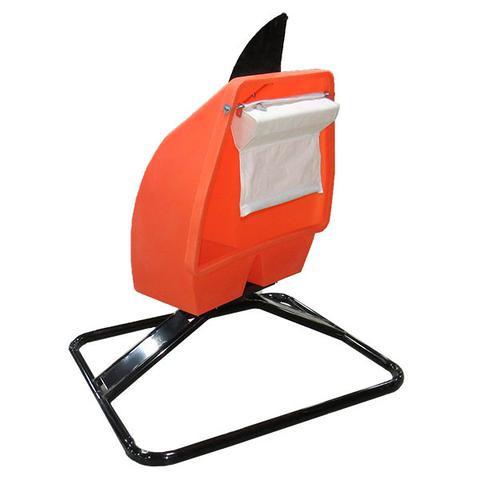
The upright mineral feeder from Sioux Steel perfects the balance between protecting the minerals from the elements and providing a constant supply of minerals for your livestock.  With its 360° swiveling, beveled poly hood, it offers aerodynamic directional protection that’s not common in a lot of mineral feeders. This feature alone will save a lot of money from being blown away by the elements.

Upright Mineral Feeder

Below is a short video on the upright mineral feeder from Sioux Steel that shows just how large and how much protection from the elements the mineral feeder offers.

Video Text:

“This is this Sioux Steel upright hooded mineral feeder.  The beveled hood opening is large enough to accommodate horned cattle and the low center of gravity adds to stability.  The 16gauge steel tubular frame is built for stability and strength.  The aerodynamic hood and wind vane aid in directional control.  The free hundred and 60° rotation protects the minerals from the elements.  Mineral feeders can be fun.”

Be sure to head to Barn World.com to view our large selection of mineral feeders and livestock supplies.  Barn World has everything from cattle guards to saddle pads and is your one-stop shop for livestock equipment.

Visit www.BarnWorld.com today or call 720-238-2190.

Facebooktwitteryoutube

Now is the time to invest in a quality hay feeder, hay prices due to rise

Hay prices are due to rise and now’s the time to get a quality hay feeder to minimize waste.  With prices expected to climb as the year goes on, it’s more important than ever to eliminate wasted hay and not throw money away when feeding your livestock.

Barn World has a large selection of hay feeders. From new designs that literally eliminate waste like the round bale feeder hay hopper for cattle and the round bale feeder hay hopper for sheep and goats.

For cattle

For sheep and goats

Their designs allow the hay be suspended above the ground and contain any falling hay so it may be accessed by your livestock without being trampled and wasted.  These feeders will literally pay for themselves in a short amount of time.

Barn World also carries a wide selection of traditional round bale feeders.  Closed bottom hay feeders offer a simple and economical way to keep the hay from blowing around and from being pawed at and turned into wasted hay/money.  We also have the Bull Tuff hay feeder designed to take any abuse livestock can throw at it.  It’s one of the heaviest duty hay feeders on the market and is designed for maximum durability.

Bull Tuff Feeder

For horses, please check out the poly horse hay feeders designed especially for equine.  All hardware is counter sunk so nothing is exposed, providing protection and safety for your horse.  These feeders are lightweight and made of durable yet extremely strong plastic and are easy to manage.  The round bale feeder is 7 ‘ in diameter and the square panel feeder can be made into almost any size desired.

For longhorn cattle, we offer the modified round bale feeder with metal plates welded to the uprights to prevent horn-hook.

All of these feeders are designed to prevent wasted money through wasted hay when feeding your livestock.  Nothing is more disheartening then seeing your hay scattered around the pastor being walked on instead of eaten.  With the price of hay continually rising it is important to contain your costs with a hay feeder from Barn World.

Please see our full selection at www.BarnWorld.com and view all of our products from cattle guards to saddle pads.

Here’s an article from The Northwest Farm Credit Services newsletter, July 2011 detailing the outlook for the cost of hay for the remainder of the year.  Between a limited supply in an increase in demand, costs are expected to rise.

Hay supplies tight in the Pacific NorthwestPDFPrintE-mail
Wednesday, 13 July 2011 10:52
Hay supplies in the Pacific Northwest are tight. The 2011 season began with very little carryover hay available, and the cool, wet spring significantly delayed first cutting.Although the region is now moving toward second cutting, hay yields and quality have been impacted by adverse weather. With the supply situation little improved, strong demand for new crop hay is driving prices toward levels not seen since 2008.

In the Columbia Basin, harvest timelines are running between two and three weeks later than usual. First cutting of alfalfa in the Southern Basin began the last week in May and ended mid-June. Early first cutting was rained on heavily, and damaged hay was either sold directly to area dairies or green chopped.

It’s expected that all of the first cutting in the Southern Basin received at least some rain. Growers in the Northern Columbia Basin completed first cutting during the second to last week of June. It is estimated that between 75 and 80 percent of the alfalfa in the Northern Basin was rained on. Overall, yields were average to above average, but quality was off due to rain damage.

At the end of June, prices for new crop alfalfa in the Columbia Basin were running as high as $260 per ton at the stack for supreme quality. Prices for premium alfalfa were between $225 and $235, and between $215 and $225 per ton for good quality at the stack. In some cases, even fair-quality alfalfa traded above $200 per ton and lower-quality, rain-damaged hay sold for $150 per ton.

Second cutting in the Southern Basin began the last week in June and harvest will be in full swing by the first week of July. As the weather warms, there is some thought that the season will improve. Although growers north of I-90 advise they’ll be limited to three cuttings, hay producers in Othello and Mattawa have indicated the possibility of four.

The market for timothy hay was strong last year, and growers are expecting another year of profitable prices. Most growers in the Columbia Basin completed first cutting timothy during the last week of June, and Kittitas Valley producers should be mostly wrapped-up with first cutting the first week in July.

Interest in timothy is reportedly picking up, with prices mainly between $240 and $265 depending on quality. USDA Market News reported the sale of 600 tons of premium quality timothy at $280 per ton for export.

In Idaho, first cutting of alfalfa was delayed two to three weeks, and rain and cool weather continue to hamper the crop. Any hay cut prior to June 10 was rained on heavily. Second cutting will begin the last week in June. Due to the delay, predictions are that the area is likely to lose one cutting this year, and overall yield will be down 1.5 tons.

Alfalfa is in high demand from dairies, and at the end of June first-cutting supreme-quality alfalfa was selling between $220 and $240 per ton at the stack. Although prices for supreme-quality hay had reached upwards of $260 per ton for early first cutting, dairies are mainly resisting prices above $250 per ton despite limited supplies.

Premium hay had been selling between $225 and $235 per ton, and good hay for near $210 per ton. Low-quality rain-damaged hay sold for $145 per ton. For perspective, premium-quality hay sold for $150 per ton in December 2010.

Harvest timelines are running a week to two weeks behind in Oregon’s Klamath Basin. As of the last week in June, first cutting was between 75 and 85 percent complete. Yields were reported below average, and the area experienced some fairly significant rain on June 28.

A number of growers had not yet begun their first cutting, but planned to be in the field by July 1. (The cool weather allowed these growers to avoid the rain without the crop becoming over mature.) Prices in the region’s hay market were just being established, but USDA Market News confirmed the sale of 400 tons of supreme alfalfa for $250 per ton at the stack at the end of June.

Anecdotally, premium-quality hay had been priced in the $220 to $230 per ton range, and feeder hay between $190 and $200. The Klamath Basin is seeing strong demand from both in- and out-of-state buyers looking to secure inventories.

Primarily the market for first-cutting alfalfa is being driven by dairy demand. With hay acres down across the Northwest and expected lower yields on this year’s crop, dairymen don’t expect prices to soften much during the year. Because many dairies have been forced to buy hay hand-to-mouth, the supply gap between the end winter and first cutting 2011 meant that some dairies were almost out of hay.

At this point, higher milk prices are allowing dairies to cash-flow higher hay prices, and dairies that are desperate for hay are willing to buy at nearly any level of quality to lock up needed supplies.

Generally, exporters are taking a cautious approach to the market, not wanting a repeat of 2008 when prices got so high buyers backed-off. Many exporters were forced to write down high-priced hay inventories when the hay market crashed. Although exporters are anxious about procuring needed supplies, the price of first cutting is too costly given the low quality.

Instead exporters are focused on second cutting, which they hope will be of higher quality. A risk, though, is that if prices remain high and the Northwest is unable to produce a consistent supply of high-quality hay, export customers may turn to other markets for hay.

Good news for Northwest exporters is that the market is strong. According to the most recent data available from the U.S. Department of Commerce, Northwest hay exports rebounded strongly between December 2010 and March 2011.

Last summer began a trend where California hay exports exceeded those of the Northwest (for the first time ever). Referencing the graph below, hay exports from the Northwest in March were up 26 percent from February, and 35 percent year-over-year.

071311_hayprices

Exports to Japan from the Northwest were up 19 percent year-over-year in March and exports to other countries were up 58 percent. With respect to Japan, concerns over the impact of the tsunami on Northwest hay exports, so far, have proved unfounded.

Japan remains in the market for hay. Recognizing the tight supply situation this year, Japanese buyers have been fairly aggressive in negotiating for hay. Another positive factor is that China’s domestic supply of hay is down this year.

Overall, prices in Northwest alfalfa market are expected to maintain traction due to lower yields and fewer acres in production in 2011. Northwest dairies and exporters will compete heavily for second cutting, and California dairies and exporters are likely to enter the market searching for additional supplies of hay.

The significant hay shortage on the West Coast will likely find only limited relief as additionally new crop alfalfa becomes available. The reality is that supplies are tight, and weather for the remainder of the season will ultimately dictate how short the crop really is.  FG

—Source: Northwest Farm Credit Services newsletter, July 2011

Graphic courtesy of Northwest Farm Credit Service
Graphic sources: U.S. Department of Commerce, Hoyt Report, and USDA National Agricultural Statistics Service (Northwest average alfalfa price includes Idaho, Oregon and Washington)

Facebooktwitteryoutube