

SHOP ALL OF OUR MINERAL FEEDERS
Feeder Description
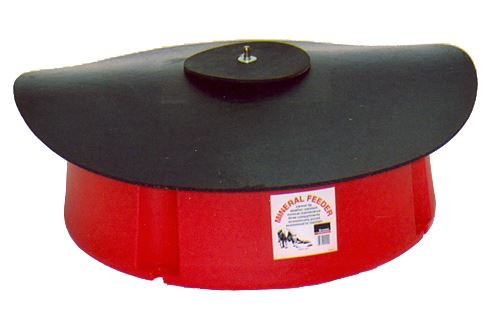
This durable mineral feeder is 41" in diameter and makes sure your livestock get the minerals they need. It's even horse-friendly! It comes with a heavy-duty 41" lid and can easily be moved from pasture to pasture as needed.
Your cattle must get the nutrients they need for weight (and profit) gain while remaining healthy. This durable ground mineral feeder is designed with your toughest bulls in mind and with its poly construction, will last a long, long time.
Keep your animals (and your profits!) healthy with this tough feeder from Barn World.
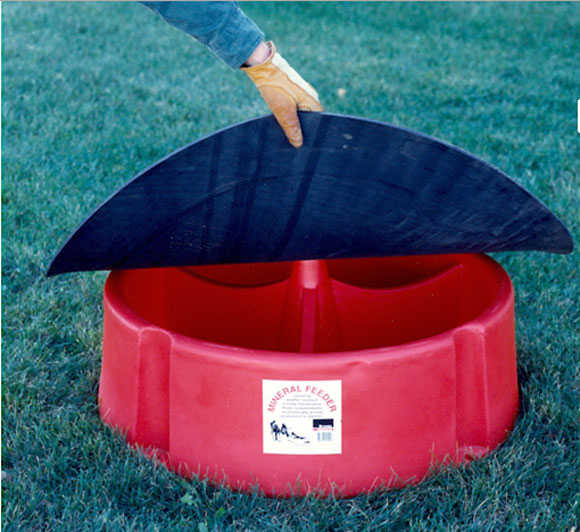
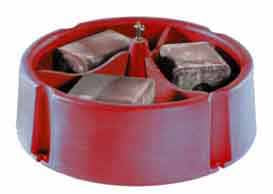
The feeder holds approximately 150 pounds of dry mineral or 200 pounds of loose minerals and will provide enough for 40 head of cattle. It stands just over 17" tall and is 41" in diameter and approximately 60 pounds. The poly molding process provides extra material around the center post for strength and stability. The center post support has a six-inch diameter base, and all three partitions come together in the middle to provide additional vertical support to the entire length of the flap pin.
The open feeder shown here displays three, 50-pound blocks of mineral (or salt) and can hold larger blocks of up to 12" square. If using loose supplements, you can fill the compartments to the top and get 200 pounds in the full feeder.

Ground Mineral Feeder with Flap
The feeder base has four notched clenches for easy anchoring, and each compartment has a solid bottom to keep your supplements off the ground.

Ground Mineral Feeder Specification Chart
| Specifications | |||||||
|---|---|---|---|---|---|---|---|
| Model No. | Animal Capacity | Mineral / Feed Capacity | Overall Diameter | Hopper Diameter | Eating Height | Overall Height | Shipping Weight |
| LMF10 | 40 head | 150 lbs. (68.2 kg) | 41" (104.1 cm) | Top 33" (83.8 cm) | 11" (27.9 cm) | 17.3" (43.9 cm) | 60 lbs. (27.2 kg) |
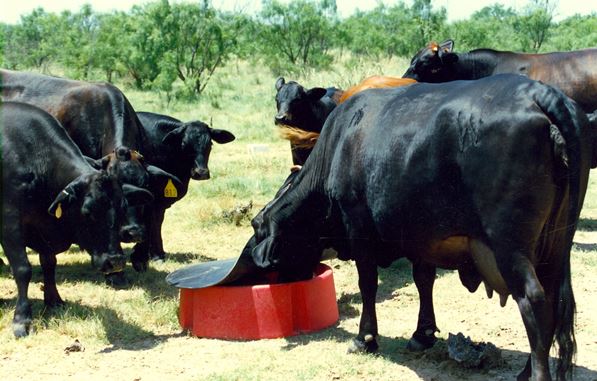
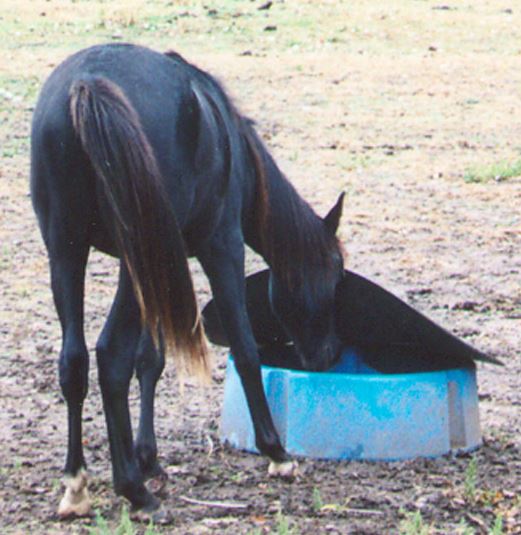
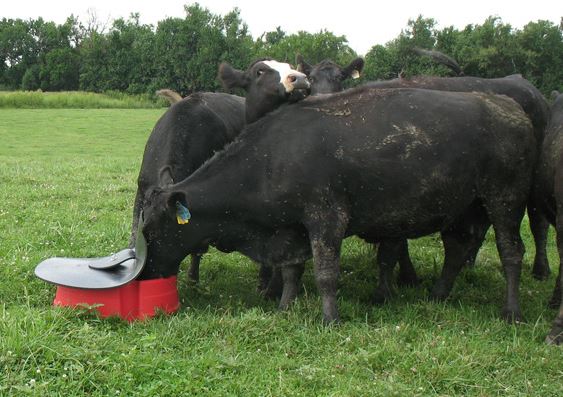
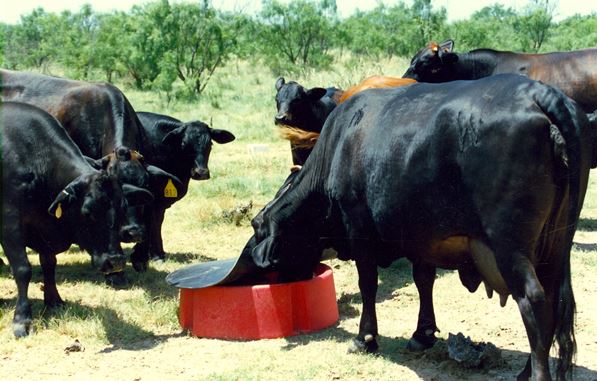
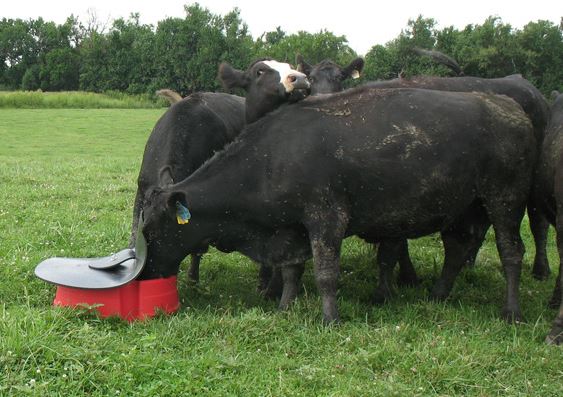
Pictures of the mineral feeder in action!
These cows are lining up to get at the supplements!
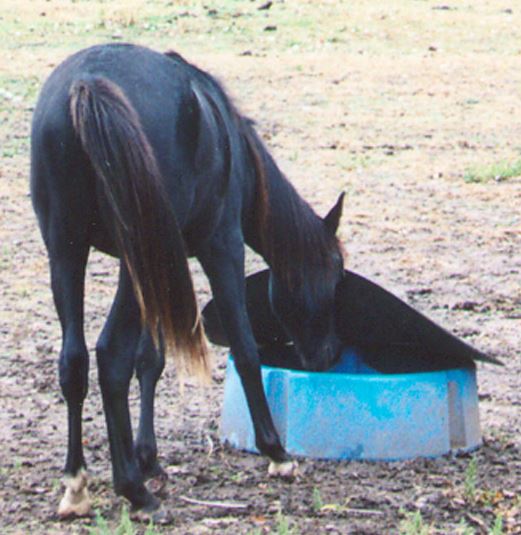
Horse Mineral Feeder Too!

Why Use Our Ground Mineral Feeder?
Your time is too valuable to spend it "messin'' with a mineral feeder"
You've experienced it all - rotating feeders that don't quite rotate, welded legs that come apart, rubber flaps that disintegrate with little use, frozen bearings, and feeders frozen in the ground. This mineral feeder is easily moved from pasture to pasture and is easily used by all types of farm and ranch animals, including horses. The strong, thick UV-protected flap protects feed & minerals and protects your time and money. Most any animal is attracted to this feeder and readily learns to use it - no training necessary!
NO EXPOSED SHEET METAL, STEEL LATTICEWORK, OR STRAPS FOR YOUR ANIMALS TO GET CAUGHT ON
The feeder has a strong, solid bottom, while cheap imitations leave an exposed cavity (and leave a hole in your pocketbook). The molding process is engineered to permit extra material to flow into the center post for extra strength. The post has a 6-inch (15.2 cm) diameter base and is further supported by each of the three partitions.
There are four notched flanges for easy anchoring molded right into the base. The heavy-duty 41-inch (104.1 cm) diameter flap is protected by a rubber disk. Before you purchase any other feeder, ask experienced users how well competitors' flaps hold up.
The link pin allows the flap to ride up when lifted by an animal, and this permits a "give" which extends the life of the flap and feeder. The high-density polyethylene includes a hindered amine light stabilizer, the most effective ultraviolet inhibitor available.
It holds three 50 lb. (22.7 kg) salt or mineral blocks and can accommodate larger blocks up to 12 inches (30.5 cm) square. It can also hold 200 lbs. (90.0 kg) of loose supplement when full.
DO NOT PUT YOUR MINERAL FEEDER ON A PEDESTAL OR OTHERWISE ELEVATE IT FROM THE GROUND.
1. Cows eating with their heads in the downward "natural grazing position" produced 17% more saliva than those eating from an elevated surface. Additional salivation had a direct positive influence on the efficiency of rumen function. Overall digestion was significantly enhanced. -From a Study by: McFarlane, I.S. 1972. Bovine behavior patterns. Livestock Breeder Journal. December, 15 (no. 12): 6.
2. Milking cows were observed for the occurrence of feed-tossing behavior. About 10% of the cows engaged in this excessive sorting and throwing of feed. As a result of feed tossing over their backs and along their sides, feed wastage for these cows ranged up to 10 percent. When given the choice of eating from an elevated (28 cm - 11 inches) bunk versus one at ground level, the cows chose the lower level, and feed tossing was not observed. The authors of this study concluded that feed sorting and throwing is an engineering problem. The solution is designing equipment that permits cattle to feed "in the natural, head-down, grazing-like position." -From a study by Albright. J.L. and W.R. Stricklin, 1989. Recent developments in the provision for cattle welfare. In: C.J.C. Phillips (Ed.) New Techniques in Cattle Production. pp 149-161. Butterworths, London.
Other Advantages
-minimal maintenance
-weather-resistant
-cannot tip
-three compartments
-the most effective ultraviolet inhibitors
-easy anchor notches
-economically priced